


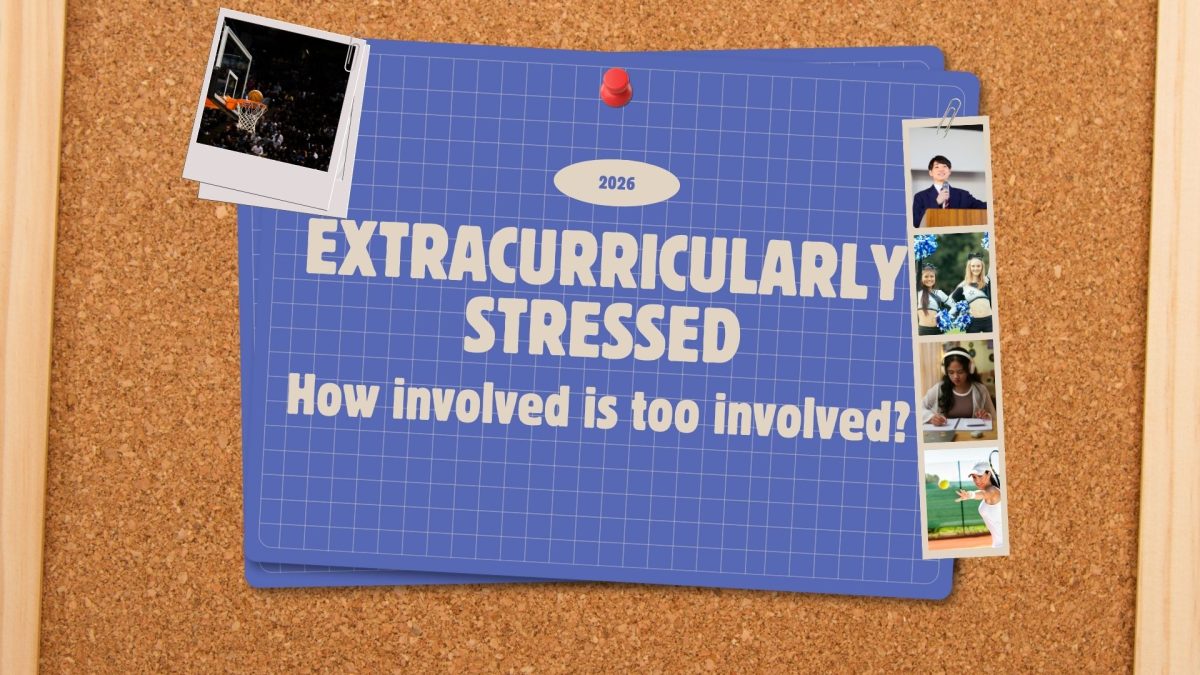
One common piece of advice given to freshmen on their first day of high school is to get involved in extracurricular activities. While this is great advice that can give students the opportunity to branch out, students also experience a major shift in the rigor of their courses compared to middle school. The pressure to excel in rigorous high school academics while stacking on extracurricular activities has created a challenging environment for many students that often leads to elevated stress, anxiety and early indicators of mental health struggles, including a phenomenon known as Duck Syndrome.
Coined at Stanford University, Duck Syndrome describes students who appear calm and effortless on the surface, like a duck gliding smoothly across water, while frantically paddling beneath to manage intense demands and maintain a composed image. Though most associated with competitive college settings, its roots frequently take hold in high school amid overscheduling and relentless performance pressure.
In a study at the University of Georgia, published in February of 2024, researchers, such as assistant professor of economics Carolina Caetano, examined “enrichment activities” such as homework, tutoring, sports, clubs and lessons. It was revealed that these activities start to negatively impact students academically, with additional time yielding essentially zero benefit to cognitive skills and actively harming non-cognitive skills like emotional well-being, particularly in high school, where pressures surrounding college admissions amplify the load.
“It’s not that these assignments and activities have no value, but a threshold can be reached in which the effects turn negative,” Caetano said. “There’s quite a lot of pressure on these kids from all corners. They’re undertaking much more than they really should when they probably should, at this point, just be spending more time with friends and just being free.”
This increased pressure contributes to some broader trends in the mental health of students. The Healthy Minds Study, an annual survey of U.S. college students, reported alarmingly high rates in its 2021-22 results: 44% reported depression symptoms and 37% were reported to struggle with anxiety disorders. In the height of overscheduling, students often lack free time to relax or take part in some of their own hobbies, this leads to an increase of stress for the student.
“My schedule’s pretty packed. I’ve got roughly 30 minutes of speech meetings, an hour and a half of speech coaching, 2.5 hours of cheer practice and TIE (Teens Influencing Equity) club whenever it meets,” junior Danielle Ibe-Ikechi said. “Plus, homework’s a given, and Saturdays are basically taken up by speech competitions. It’s a lot, especially since I’m not even counting non-school related stuff like volunteering.”
However, involvement in extracurricular activities isn’t entirely negative. Activities such as these build skills, friendships, resumes and college applications when managed well. The key to managing the stress is recognizing when the load becomes an overload and taking proactive steps to reclaim personal balance.
One of those steps is effective time management. Students can map out fixed commitments like practices, deadlines and tests, alongside flexible commitments, using tools such as planners, to-do lists or digital calendars to prioritize and avoid last-minute cramming. This allows them to know exactly when they are supposed to do something, and when they are able to take a break to do something that makes themselves happy, such as hobbies or hanging out with friends.
“The best way to handle stress is to be proactive,” according to guidance from the University of Colorado Boulder. “Using time management skills like planning your schedule, keeping to-do lists and breaking up big assignments.”
Another equally vital step to reclaiming balance is carving out intentional downtime. Whether it be journaling, listening to music, sleeping in, hanging out with friends or just simply doing nothing at all. Scheduled relaxation prevents burnout and restores mental balance.
“I keep things on track by making a schedule, staying productive and rewarding myself when I finish something,” Ibe-Ikechi said. “That motivation boost really helps. After a crazy week, I blast some music, catch up on sleep or chill with friends. Sometimes, I just become a couch potato and do absolutely nothing for a bit.”
Ultimately, high school is a time for growth. Whether that be academically, socially or personally, it should not be at the expense of well-being. By setting boundaries, prioritizing self-care and knowing when to scale back, students can stay involved in everything that makes them happy without sacrificing their mental and physical health.